Fibre 101: What and How
You’re getting your protein. Are you getting your fibre?
You’re paying attention to protein now, making better restaurant choices and fitting workouts around a busy calendar.
But if your typical day is eggs, a protein shake, a chicken salad and steak for dinner, you could still be missing something useful.
Fibre.
It deserves your attention if you want to lose body fat, improve your blood work and take care of your long-term health. Getting more of it doesn’t need to create another job for you.
Why should you care?
Fibre is the part of plant foods your body doesn’t fully digest. Different types do different things, but you don’t need to memorize them to benefit.
Here’s what matters:
Appetite: Fibre-rich meals can help you feel full, making it easier to manage how much you eat.
Cholesterol: Certain soluble fibres, including those in oats, barley and psyllium, help lower LDL cholesterol.
Blood sugar: Some fibres slow carbohydrate absorption, reducing the rise in blood sugar after a meal.
Digestion: Fibre supports bowel regularity, and some types feed beneficial gut bacteria. Mayo Clinic
There’s also strong evidence that foods containing fibre lower colorectal cancer risk. It’s one useful part of prevention, not a guarantee. World Cancer Research Fund
How much do you need?
Daily recommendations for adults aged 19–50 are 25 grams for women and 38 grams for men. After 50, those figures are 21 and 30 grams respectively. Your individual needs may differ. HealthLink BC
If you’re currently getting very little, start with one reliable addition. We’d rather help you build a breakfast and lunch that consistently get you closer than hand you another number you don’t know what to do with.
Make the meals you already eat work harder
You don’t need enormous salads or hours of meal prep.
If you already eat… | Try adding… | Approximate extra fibre |
|---|---|---|
Greek yogurt | 1 cup raspberries | 8 g |
A chicken bowl | ½ cup black beans | 7 g |
Overnight oats | 1 tablespoon chia seeds | 4 g |
An afternoon snack | 1 medium pear with skin | 5 g |
A takeout dinner | 1 cup cooked mixed vegetables | 6 g |
Amounts vary by food and preparation. Estimates adapted from HealthLink BC.
The same approach works when ordering out. Include beans in your burrito bowl, add edamame to your Japanese order, or get oats and fruit alongside your hotel breakfast eggs.
Travelling for work? Make breakfast and snacks predictable.
You can’t always control the conference lunch or client dinner. You can arrange a few reliable options around them.
Pack or have delivered | How to use it | Approximate fibre |
|---|---|---|
Roasted chickpea snacks, such as Three Farmers | Keep a portion in your laptop bag for flights or between meetings. | About 5 g per 28 g pack; check the label |
Overnight oat packets, such as HOLOS | Add milk and refrigerate according to the instructions. Top with fruit. | 11-12g per packet |
Chia seeds | Stir into oats or yogurt and allow to hydrate. | 4 g per tablespoon |
Almonds | Portion into small containers or bags. | 4 g per ¼ cup |
Pears or apples (skin on) | Pair with breakfast or an afternoon snack. | 5 g per pear; 4 g per apple |
Food estimates: HealthLink BC. Snack information: Three Farmers.
For a three-day trip, pack three breakfast sachets and three chickpea snack packs. Have fruit, milk and yogurt delivered through Uber Eats to your hotel or Airbnb when you arrive, where grocery delivery is available.
Prefer to pack nothing? Order everything. Save the grocery list for your next trip, or have your assistant arrange it. Confirm you have a fridge if you’re preparing overnight oats.
Try unfamiliar high-fibre snacks at home first. A flight is a terrible place to discover your stomach dislikes them.
Build your fibre like you build your strength: gradually.
If you’re eating around 10–15 g daily, you don’t need to jump straight to 35 g tomorrow.
Keep each change in place before adding the next.
When | What to practise | Approximate increase |
|---|---|---|
Week 1 | Add an apple, pear or ½ cup of raspberries daily. | 3–5 g daily |
Week 2 | Keep the fruit. Add a cup of cooked broccoli or mixed vegetables at dinner. | Another 4–6 g |
Weeks 3–4 | Keep both habits. Add a tablespoon of chia or ground flax to an existing meal. Start smaller if needed. | Another 2–4 g |
Weeks 5–8, if needed | Make a higher-fibre breakfast your usual choice, or include ½ cup of beans at lunch. | Depends on what it replaces |
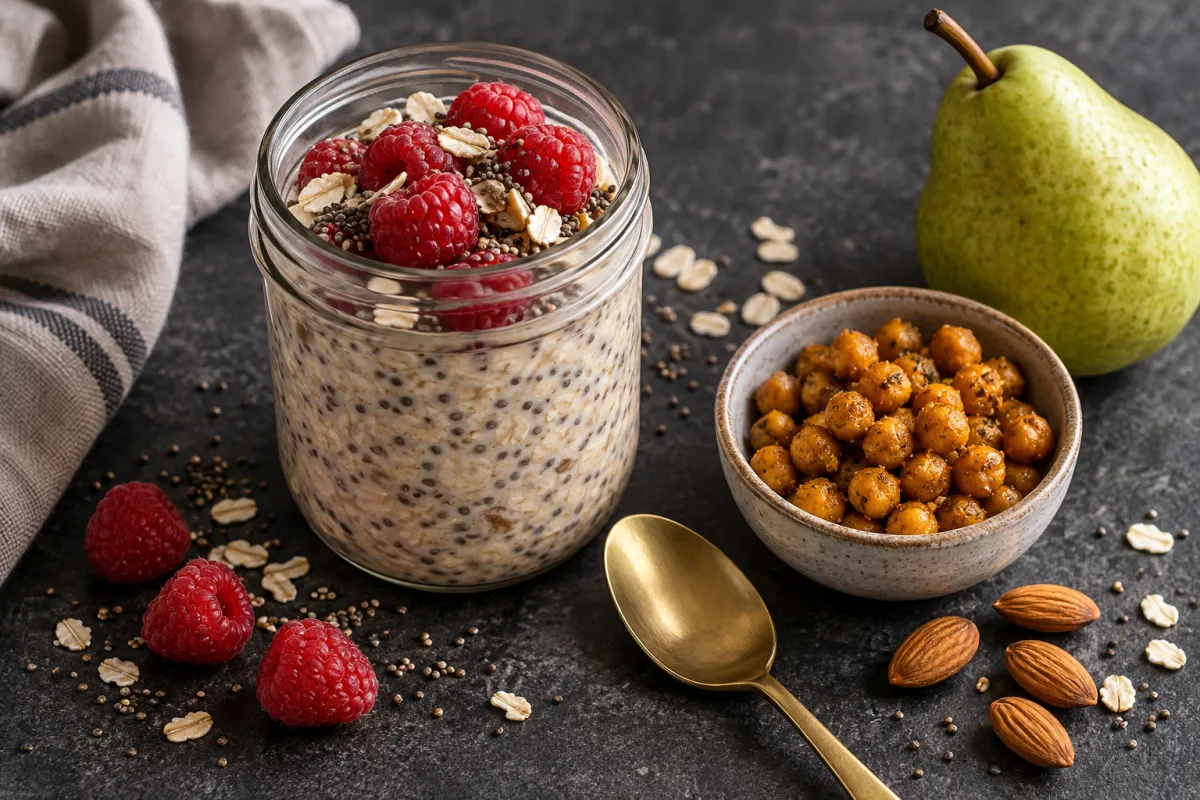
An easy overnight oat jar: 50 g rolled oats, one tablespoon of chia, ½ cup of raspberries and your preferred milk. That provides roughly 12–13 g of fibre, before any contribution from the milk.
If your daily fruit and chia are already in that jar, they’re already counted. The jar combines those habits; it doesn’t add another 12–13 g on top.
You may reach your target before week eight. Stay there. There’s no prize for continually pushing the number higher.
If you develop uncomfortable bloating or bowel changes, hold steady or reduce the latest addition. Drink fluids regularly and build more slowly. Gradual increases help limit digestive discomfort. HealthLink BC
A supplement can help fill a gap, but food provides a wider range of nutrients. If you have a digestive condition or take medication, check the appropriate supplement and timing with your healthcare provider or pharmacist. Mayo Clinic
Start with one meal this week. Add something easy enough to repeat on your busiest day.
That’s how we approach nutrition at Ludus: practical changes that fit your life, move you towards your goals and don’t send your stomach on strike.
If you want help organizing this around your busy life, click here to request a consultation with us.